
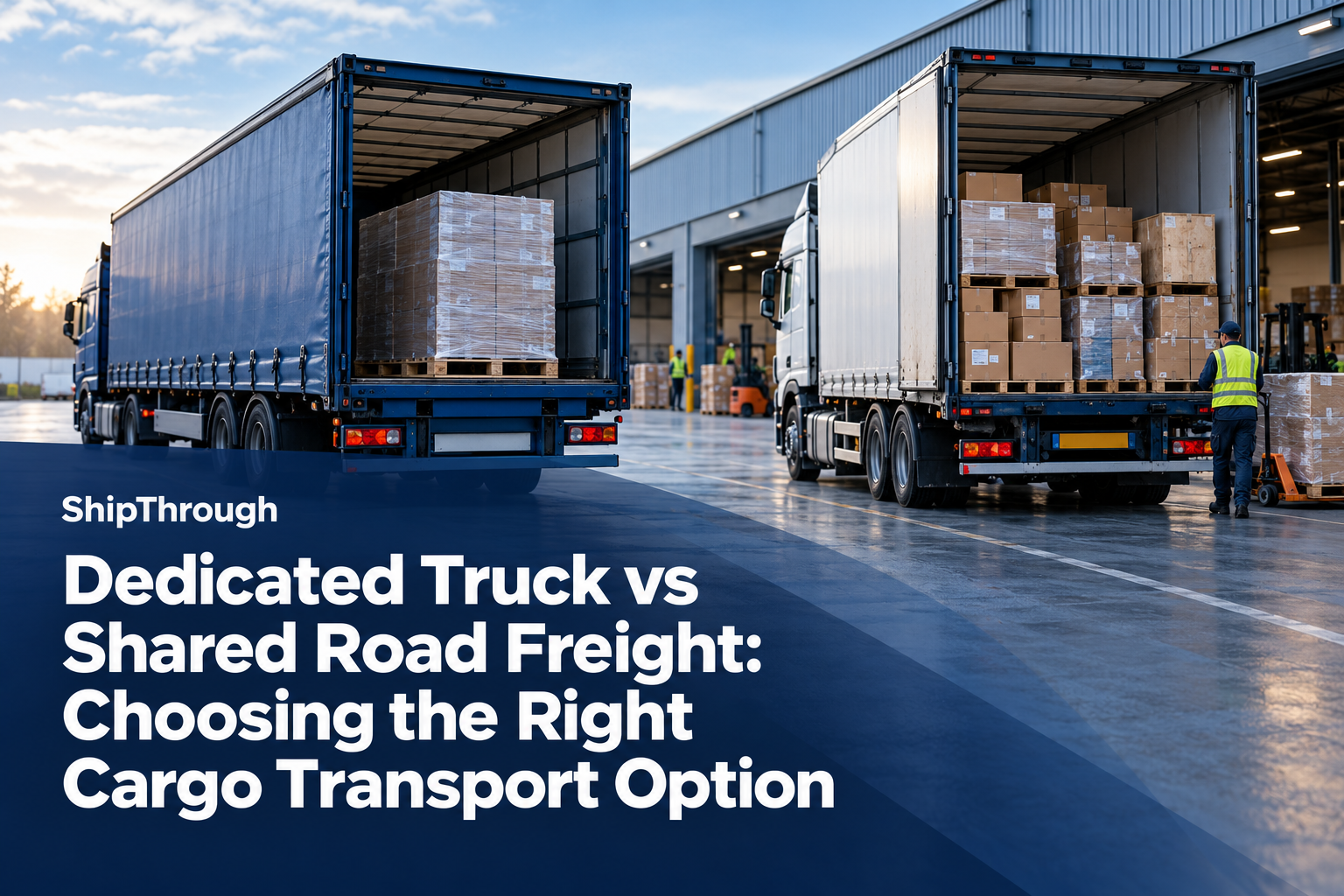

What is the difference between dedicated and shared transport
A dedicated truck allocates the agreed vehicle capacity to your shipment, while shared road freight combines compatible cargo from multiple customers within a transport arrangement. Dedicated transport can offer greater scheduling control and may reduce consolidation steps. Shared freight can suit smaller loads when its route, handling, and delivery schedule meet your needs.
Neither option is automatically best. Choose according to the cargo, total cost, deadline, handling requirements, and receiving conditions. Road freight services should be matched to the shipment rather than selected only by the cheapest advertised rate.
When dedicated capacity may make sense
Dedicated transport is worth considering when the cargo occupies substantial vehicle capacity, requires a specific pickup window, or benefits from a more direct movement between locations.
A manufacturer might need goods collected after a production shift and delivered within a planned receiving window. A distributor may have enough stock to justify a vehicle assigned to the load. In both cases, the commercial value lies partly in control over the movement.
However, dedicated does not automatically mean nonstop travel, unlimited waiting, or guaranteed arrival. Confirm the route, vehicle type, service scope, and any timing commitments in the agreed booking.
When shared freight may be suitable
Shared transport can be practical when a smaller consignment does not justify the cost of an entire vehicle. Compatible shipments share capacity, allowing the business to purchase a transport arrangement that better matches its load.
It may involve consolidation, intermediate handling, or multiple delivery stops depending on the service. Ask how the shipment will move rather than assuming every shared arrangement works the same way.
This option may suit replenishment cargo with flexible receiving dates. It is less attractive if an exact deadline or unusual handling requirement cannot be accommodated. Confirm acceptance and scheduling before arranging supplier release.
Compare cargo volume and weight
Provide final packed dimensions, gross weight, and package count. Capacity is affected by space and weight, not simply the number of cartons.
Ten small cartons can be easy to accommodate, while ten large crates may need a very different vehicle. Dense goods can reach weight limits before the vehicle appears full. Irregular or non-stackable pieces may consume more usable capacity than their arithmetic volume suggests.
The transport coordinator should assess the appropriate vehicle and lawful load limits for the route. Do not estimate suitability by how much unused floor space appears available in a photograph.
Assess scheduling and delivery flexibility
Start with the actual pickup readiness date and required delivery window. Include supplier operating hours and the receiving site’s restrictions.
Dedicated capacity may provide more control over dispatch, but the route and operating conditions still affect the journey. Shared services can depend on available consolidation schedules and other shipment movements. Clarify whether the estimated date refers to dispatch, destination arrival, or delivery to your premises.
If a delay would stop production or cause a missed customer commitment, explain that consequence before booking. The provider needs to understand the deadline to assess whether the proposed service is appropriate.
Consider handling and packaging
Cargo should be packed for the actual transport and handling sequence. Shared arrangements may include more transfers, making clear labeling and suitable packaging particularly important.
Fragile products, machinery, non-stackable pallets, liquids, or other special cargo need advance disclosure. Compatibility with other goods and the required handling method should be assessed before acceptance.
Dedicated transport does not remove the need for load securing or protective packaging. The goods still experience loading, vehicle movement, and unloading. Ask who provides the necessary equipment and labor at each end. Insurance and claims terms should be understood separately from the capacity choice.
Compare the complete transport cost
Request matching quotations using the same collection address, destination, cargo details, and delivery scope. Confirm whether rates include collection, transfers, delivery, handling, and any required equipment.
Ask about waiting time, additional stops, failed delivery, restricted access, and changes to the load. These can affect cost depending on the booking terms.
A shared option may have a lower initial price but be commercially unsuitable if it delays essential stock. A dedicated vehicle may be unnecessary when the load is small and the receiving date is flexible. Evaluate the freight charge alongside the operational consequences of each choice.
Check both pickup and delivery access
The correct vehicle must be able to reach and operate at the supplier and receiving premises. Share narrow-road constraints, gate limits, parking restrictions, appointment rules, and any equipment available on site.
Confirm whether goods are ready at ground level, on a loading dock, or somewhere requiring additional movement. A transport quotation should not depend on an unspoken assumption that the driver will carry heavy packages through a building.
For shipments arriving through a port or airport, collection also depends on release readiness. Coordinate transport with customs clearance support and the relevant cargo availability updates.
Connect road freight with storage and international shipping
Road movement often links suppliers, terminals, warehouses, and customers. A good plan accounts for each handoff rather than optimizing one truck journey in isolation.
If goods arrive before your receiving site is ready, warehousing services may be useful. If inland transport follows ocean freight, check release, collection, unloading, and any container-return responsibilities.
Share the wider shipment schedule so the road booking fits the actual arrival and dispatch sequence. This is particularly helpful when different teams manage international transport and domestic delivery.
Frequently asked questions
Is dedicated transport always faster
No. It may offer a more direct or controllable arrangement, but actual timing depends on pickup readiness, routing, availability, and delivery conditions.
Can shared freight carry fragile goods
Acceptance depends on the product, packaging, handling method, and compatibility requirements. Provide accurate details for assessment before booking.
Should I book a vehicle before cargo release
Plan ahead, but confirm collection readiness before dispatch. An anticipated release date alone may not justify sending a vehicle to wait.
Choose transport using actual shipment requirements
Include packed measurements, weight, collection and delivery addresses, access details, and your deadline when you request a road freight quote. These details help ShipThrough assess a suitable capacity and delivery arrangement.