
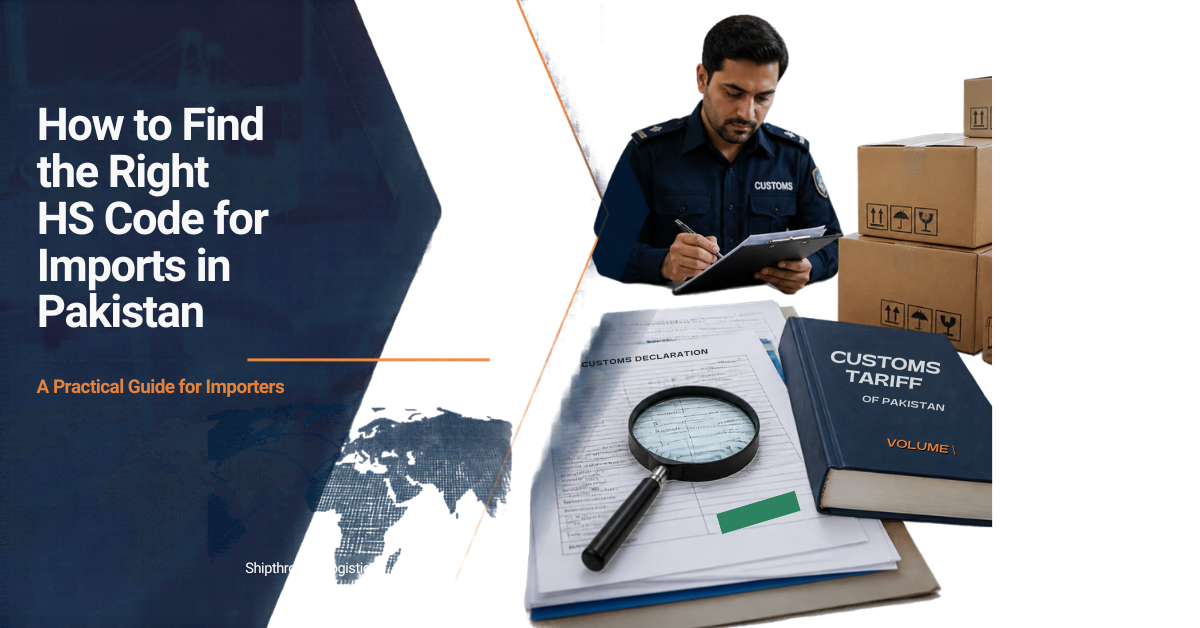

An HS code is the number customs uses to identify what you are importing, and it decides your duty, taxes and any import conditions. To find the HS code for imports in Pakistan, describe the product precisely, work down the tariff from chapter to heading to subheading, then confirm the full 8-digit PCT code before shipping.
Key takeaways
- The first 6 digits of an HS code are international. Pakistan adds further digits to form its PCT (Pakistan Customs Tariff) code, typically 8 digits.
- Classification follows what the product is made of and what it does, not what your supplier calls it.
- The wrong code can mean wrong duty, a hold at the port or penalties. Fixing it after arrival costs time.
- Get the code agreed between you, your supplier and your clearance agent before the goods leave origin.
What is an HS code?
An HS code is a product classification number from the Harmonized System, maintained by the World Customs Organization (WCO). Almost every trading country uses the same first 6 digits, so a code for cotton t-shirts in China means the same thing at Karachi Port.
The structure narrows down in steps:
- Chapter (2 digits): broad group, such as chapter 85 for electrical machinery.
- Heading (4 digits): a product family within the chapter.
- Subheading (6 digits): the specific product type.
- National tariff line (further digits): set by each country for its own duty rates.
What is the difference between an HS code and a PCT code in Pakistan?
The PCT code is Pakistan’s national version of the HS code. It starts with the same 6 international digits and adds digits that Pakistan Customs uses to set duty rates, regulatory duty, sales tax treatment and import conditions.
So your Chinese supplier’s 6-digit HS code is a starting point, not the final answer. The goods declaration filed in WeBOC needs the full PCT code, and two products that share 6 digits can sit on different 8-digit lines with different duty. This is the step importers skip most often.
How do you classify a product step by step?
Classification is a process of elimination. Here is the method we use when a client sends us a new product.
- Write an exact description. Material, function, how it is powered, how it is packed and what it is used for. “Machine parts” is not a description. “Cast iron pump impeller for a centrifugal water pump” is.
- Find the chapter. Start from the section and chapter notes in the tariff. These notes include and exclude products, and they override the heading titles.
- Pick the heading. Read every heading in the chapter that could fit. If two seem right, the more specific one usually wins.
- Narrow to the subheading. Compare only subheadings under the heading you chose.
- Match the national PCT line. Check the current Pakistan Customs Tariff for the full code, duty rate and any notes on the line.
- Check import conditions. Some codes need permits, certificates or approvals from other departments before release. Find this out before shipping, not after.
- Record your reasoning. Keep a short note of why you chose the code, with product photos and the datasheet. If customs questions it, you have an answer ready.
For mixed products, kits and parts, the WCO’s General Interpretative Rules decide the code. Sets are often classified by the item that gives the set its essential character. That judgement is where an experienced clearance agent earns their fee.
What are the most common misclassification mistakes?
The biggest mistake is copying the supplier’s code without checking. The exporter’s country may use different national digits, and some suppliers choose a code that suits their export paperwork rather than your import.
Other mistakes we see regularly:
- Classifying by use instead of material. A plastic part for a car may not belong under vehicle parts, depending on the chapter notes.
- Using one code for a mixed consignment. If your container holds five different products, each needs its own line.
- Ignoring parts versus complete machines. An unassembled machine shipped in pieces can still be classified as the complete machine.
- Using last year’s code. The HS is updated every few years and Pakistan’s tariff is amended through the Finance Act, so codes and rates change.
Mismatched codes and descriptions are among the common causes of customs delays at Karachi Port and Port Qasim, so this step pays for itself.
How does the HS code affect duty and clearance time?
Your PCT code sets the customs duty, any additional or regulatory duty, sales tax and withholding tax applied at import. Rates differ widely between lines, sometimes between products that look almost identical. We do not publish rates here because they change, and the duty for your goods should be checked against the current tariff for your exact code.
The code also affects clearance speed. A code that matches the invoice description, packing list and product samples moves through assessment more smoothly. A vague description or a code that does not match the goods is more likely to trigger examination. The code has to match the invoice and packing list line by line, so use our customs documents checklist to review the whole file before the goods arrive.
If cargo sits at the port during a classification query, cargo storage in Pakistan near the port can cost less than mounting port charges.
Frequently asked questions
Where can I look up HS codes for Pakistan?
The current Pakistan Customs Tariff, published by the Federal Board of Revenue (FBR), lists the full PCT codes with duty rates. The WCO publishes the international 6-digit nomenclature. Your clearance agent can also confirm the code against the latest amendments.
Can I use my supplier’s HS code?
Use it as a reference only. The first 6 digits are often correct, but the national digits differ by country, so the full PCT code must be checked against Pakistan’s tariff.
What happens if I declare the wrong HS code?
Customs may reassess the duty, hold the goods for examination and, in some cases, impose penalties. It also slows the release of later shipments. Correcting the code before filing is far cheaper than correcting it after.
Do samples and small shipments need an HS code?
Yes. Commercial samples and small consignments still need a classification for the goods declaration, although simplified procedures may apply to some courier shipments. Ask your forwarder which route applies to your shipment.
Classify before you ship
Getting the code right is cheaper than fixing it at the port. Send us your product description, datasheet and supplier invoice, and our customs team in Karachi and Lahore will review the classification along with the rest of the shipment. Contact our Karachi or Lahore team to start.