
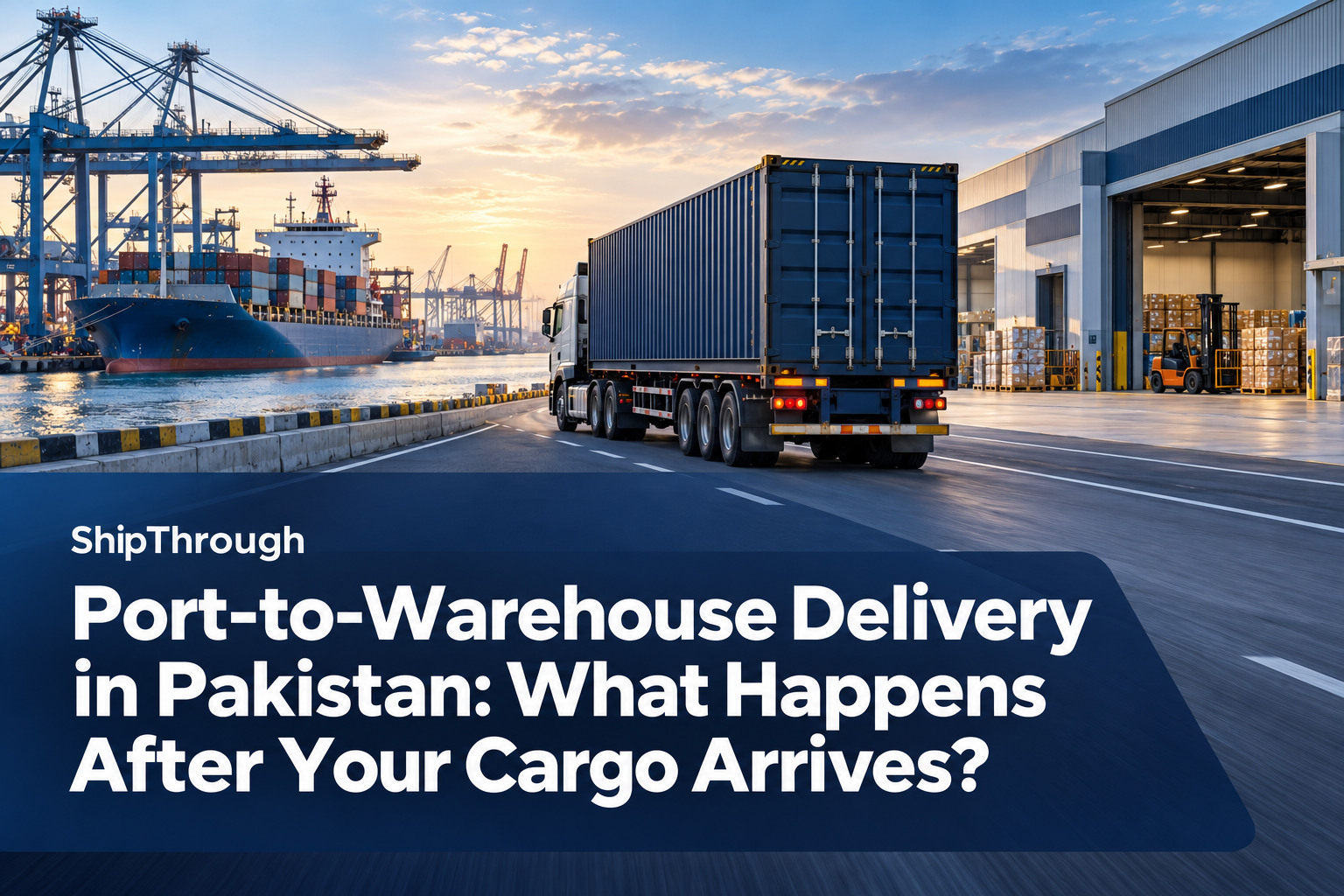

What is port to warehouse delivery
Port-to-warehouse delivery is the coordinated movement of cargo from its arrival port to the business’s receiving or storage location. It involves more than arranging a truck. Cargo availability, customs requirements, release procedures, collection readiness, vehicle selection, and warehouse receiving must align before the delivery can be completed efficiently.
A vessel arriving does not automatically mean your goods are ready to leave the port. Understand the milestones between arrival and receipt so your inventory plan reflects the actual journey. Ocean freight services and inland transport should be planned as connected parts of the shipment.
Stage one confirm arrival and availability
Track the expected vessel arrival, then confirm the actual operational status through the appropriate parties. Discharge, cargo availability, and collection readiness are separate events.
For LCL cargo, destination separation may be required before the individual shipment becomes available. For FCL, container availability and release arrangements must be checked. Avoid assuming both follow an identical process.
Ask which milestone the latest update describes. A message saying the vessel has arrived is useful, but it is not sufficient instruction to send a collecting vehicle. Confirm what remains outstanding and when the next update is expected.
Stage two organize clearance and release
The shipment must complete the applicable customs process and the other release requirements relevant to the transport arrangement. These can involve different parties and documents.
Through customs clearance coordination, prepare the commercial records and respond promptly to requests. Separately, ensure shipping-document and carrier-release arrangements are understood.
Assign responsibility for documents, payments, and approvals before arrival. When several people need to act, keep a clear sequence rather than relying on informal messages. The objective is to know whether the cargo is still being processed, has been released, or is genuinely ready for collection.
Stage three select the transport arrangement
The vehicle and loading plan depend on cargo form, weight, dimensions, destination, and handling needs. A full container, loose cartons, pallets, or a large crate can require different equipment and arrangements.
Give the transport coordinator final packed measurements, gross weight, and the delivery location. Disclose fragile goods, unusual dimensions, or special handling needs early. A truck selected from package count alone may not suit the actual load.
Road freight services can connect ports with warehouses and other receiving sites. Confirm whether the agreed scope includes loading assistance, unloading equipment, labor, or only transportation. Those details should be settled before the vehicle arrives.
Stage four check warehouse receiving conditions
Your warehouse team needs more than an estimated delivery date. Confirm opening hours, appointment requirements, gate access, receiving contacts, and the resources needed to unload safely.
A container delivery may require suitable parking and unloading space. Palletized cargo may need a forklift or other equipment appropriate to the actual load. The required method should be assessed by the receiving team rather than assumed by the driver.
Check whether the site can accommodate the vehicle. Narrow access, height restrictions, or limited operating hours can alter the practical delivery plan. Share these constraints before collection to reduce failed delivery attempts.
Stage five dispatch only when collection is ready
Once release and collection readiness are confirmed, align vehicle dispatch with the pickup arrangements and warehouse receiving slot. Last-minute changes should reach both the transport and warehouse teams.
Record the collection instructions, cargo reference, responsible contacts, and destination. Verify that the vehicle is collecting the correct shipment, particularly when several consignments are moving at once.
Keep a reasonable allowance for traffic and operational conditions without presenting a delivery estimate as an unconditional promise. Ask how changes in pickup timing will be communicated so staff and unloading resources can be adjusted.
Stage six receive and document the goods
At receipt, compare the shipment with the delivery documents and packing list. Count packages, check visible condition, and record discrepancies through the agreed process.
If a package appears damaged, note the observable facts promptly and take appropriate supporting photographs. Do not assume signing a delivery document replaces the relevant claim or notification procedure. Follow the transport and insurance terms where applicable.
Move goods into the correct receiving or storage area and update inventory records. A delivery is operationally complete only when the business knows what was received and can locate the stock, not merely when the vehicle reaches the gate.
Understand waiting and storage exposure
Delays around release, collection, unloading, or container return can generate costs under the applicable terminal, carrier, and transport terms. Confirm the relevant free-time arrangements, deadlines, and charging responsibilities for your booking.
Do not treat demurrage, detention, terminal storage, and vehicle waiting as interchangeable charges. Ask what each item means within the specific arrangement and which action could prevent it.
If your premises are not ready, assess temporary cargo storage in advance. Compare the actual cost and handling requirements rather than waiting until the arriving truck has nowhere to unload.
Information needed for the delivery plan
- Shipment and transport-document references.
- Port and expected arrival details.
- FCL or LCL arrangement.
- Package count, cargo description, weight, and dimensions.
- Clearance and release status.
- Full delivery address and receiving contact.
- Warehouse hours, access limits, and unloading resources.
- Any relevant container-return instructions.
Give one person responsibility for keeping this information current. Outdated receiving instructions can disrupt an otherwise prepared delivery.
Frequently asked questions
Can my cargo leave the port when the vessel arrives
Not necessarily. Discharge, cargo availability, customs processing, and the relevant release procedures must be completed before collection can proceed.
Does a transport quotation include unloading
Only if it is included in the agreed scope. Confirm equipment, labor, waiting, and site responsibilities explicitly.
Can imported goods go to temporary storage first
Storage can be coordinated subject to cargo suitability and the agreed logistics arrangement. Discuss this before arrival if your warehouse cannot receive the shipment.
Coordinate the final leg before arrival
Share your port, cargo details, warehouse location, and receiving requirements when you request a delivery quote. ShipThrough can help connect the international shipment with its inland transportation and storage needs.