
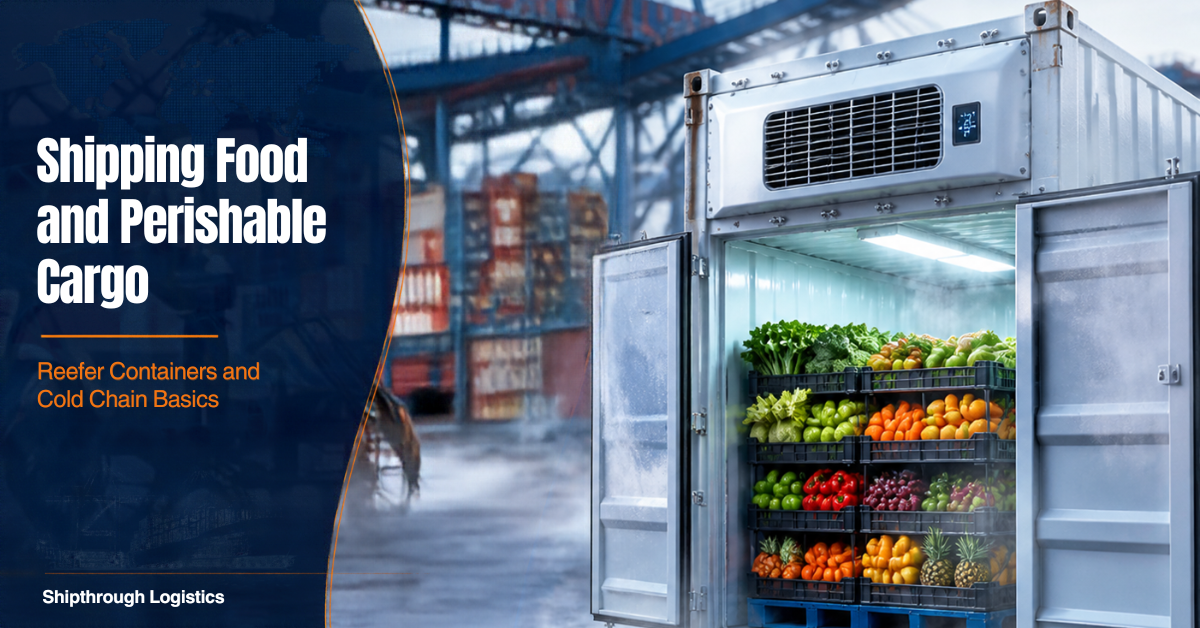

Quick answer: Reefer container shipping moves food and other perishable cargo in a refrigerated container that holds a set temperature for the whole sea journey. To get it right, you need the correct temperature for your product, cargo that is pre-cooled before loading, packing that lets cold air circulate, the right food documents and a cold storage plan at destination.
A refrigerated container is only as good as the cargo you put inside it. It keeps cold product cold. It doesn’t cool warm product down. That single point explains most of the spoiled shipments we hear about.
Here’s how the cold chain works from your packing floor to the buyer’s door.
What is a reefer container?
A reefer is a shipping container with its own refrigeration unit, powered from the vessel, the terminal or a generator set during road moves. It blows conditioned air through a T-shaped floor, up through the cargo and back to the unit.
Reefers come in 20ft and 40ft sizes, and 40ft high cube reefers are common for lighter, bulky produce. They can hold chilled or frozen temperatures, and some units also control humidity and ventilation for fresh fruit and vegetables.
Because reefers are booked as full containers, the same planning questions apply as in our guide to full vs shared container shipping: how much cargo you have, and whether it fills the box efficiently.
Which products need temperature-controlled shipping?
More than you might think:
- Fresh produce: mangoes, citrus, potatoes, onions, vegetables
- Frozen food: meat, poultry, seafood, frozen vegetables and ready meals
- Dairy and chilled food: cheese, butter, some sauces
- Confectionery and chocolate, which can melt or bloom in hot transit
- Some pharmaceuticals and chemicals with storage conditions on the label
Cargo moving through hot ports on long transits is especially exposed.
What temperature should a reefer be set to?
There isn’t one number. Broadly:
- Chilled cargo (fresh produce, dairy) is carried above freezing, at a setting chosen for that specific product
- Frozen cargo (meat, seafood, frozen food) is carried well below freezing
Within those bands, each product has its own ideal setting, and some fruits also need specific ventilation or humidity. Set the wrong temperature and produce can suffer chill damage or ripen too early.
Always confirm the exact setting with your product supplier, your buyer’s specification or your quality team. Then write it on the booking. The shipping line sets the unit to what you declare; it won’t correct it for you.
Why does pre-cooling matter before loading?
Picture this. Mangoes are packed in the afternoon heat, loaded straight into a reefer, and the doors close. The unit works hard for days just to remove field heat. Meanwhile the fruit ripens in transit and arrives soft.
Pre-cooling solves that. Bring the cargo down to its carrying temperature in a cold room before it goes in the container. Also pre-cool frozen product properly: it should be solidly frozen at loading, not partly thawed.
The container itself should be set and running at the right temperature before loading, but don’t leave the doors open in the heat for long. Load quickly, close, and check the unit reading.
How should perishable cargo be packed in a reefer?
Air must reach every carton. Good reefer packing comes down to a few rules:
- Use ventilated cartons for fresh produce so cold air passes through.
- Don’t load above the red load line marked inside the container. Air needs space above the cargo.
- Keep the T-floor clear. Don’t cover it with plastic sheets or loose cardboard.
- Stack evenly and block gaps so cargo can’t shift and so air doesn’t short-circuit through an empty channel.
- Use pallets in good condition, and heat-treated wood for international shipments.
Frozen cargo can be block-stowed tightly because it only needs cold air around it, not through it.
What documents are needed to export food from Pakistan?
Food shipments carry the standard export file plus product-specific certificates. Depending on the product and destination, you may need:
- Commercial invoice and packing list
- Bill of lading
- Certificate of origin
- Phytosanitary certificate for fresh fruit, vegetables and plant products
- Health or veterinary certificate for meat, poultry, seafood and dairy
- Halal certificate where the buyer or market requires it
- Temperature records or loading reports, if the buyer asks for them
Requirements vary by destination country, so confirm them with your buyer early. Our checklist for commercial shipment paperwork explains how to review these as one shipment file so the details match.
Keep the cold chain unbroken after arrival
The sea leg is often the best-controlled part of the journey. The weak points are the hours either side of it.
At destination, perishable cargo needs fast clearance, a powered move from the port and a cold room ready to receive it. Any wait without power is a risk. That’s why the last-mile plan should be agreed before the vessel arrives, as described in our guide to what happens after cargo reaches the port.
For imports into Pakistan, plan:
- Who will clear the cargo and how quickly documents can be lodged
- How the container will move from the port with power (a generator set or reefer truck), arranged through your onward transport from the port plan
- Where the goods will be held if the buyer can’t receive the full load at once; check that any warehousing and storage option offers the temperature control your product needs
Key takeaways
- Reefer container shipping keeps cargo at a set temperature; it doesn’t cool warm cargo.
- Chilled and frozen products need different settings, so confirm the exact temperature for each product.
- Pre-cool cargo before loading and keep airflow clear inside the container.
- Food exports usually need product-specific certificates on top of standard documents.
- Plan clearance, powered transport and cold storage at destination before the vessel arrives.
Frequently asked questions
Can I ship mixed perishable products in one reefer?
Only if they share the same temperature and don’t affect each other. Some fruits release ethylene, which ripens nearby produce, so mixing should be checked carefully.
Is reefer shipping more expensive than a dry container?
Yes, because of the equipment and the power it needs. But the cost of a spoiled load is usually far higher than the difference.
Can perishable cargo go by air instead?
Yes, for high-value or very short-life products. Air is faster but more expensive per kilogram, and cold chain gaps at airports still need planning.
Who sets the reefer temperature?
The shipping line sets the unit to the temperature you declare on the booking. The shipper is responsible for giving the correct setting.
Plan your cold chain shipment
Share your product, temperature requirement, volume and destination, and our team will discuss the ocean freight options and the temperature arrangements available for your route. Request a quote to get started.